Best Trucks With Best Gas Mileage 2026
A practical roundup review of the best options for trucks with best gas mileage, with quick picks, comparison notes, mini reviews, buying advice, and FAQ.
Best Trucks With Best Gas Mileage 2026
Pros and Cons
Pros: The shortlist makes it easier to compare the strongest fits for trucks with best gas mileage before you spend time on the fine print.
Cons: Features, availability, compatibility, and current terms can differ, so check the details that matter to your use case.
Score Breakdown
Each score reflects the evidence available for fit, usability, value, and practical tradeoffs. Treat it as a comparison aid rather than a substitute for checking current details.
Roundup review
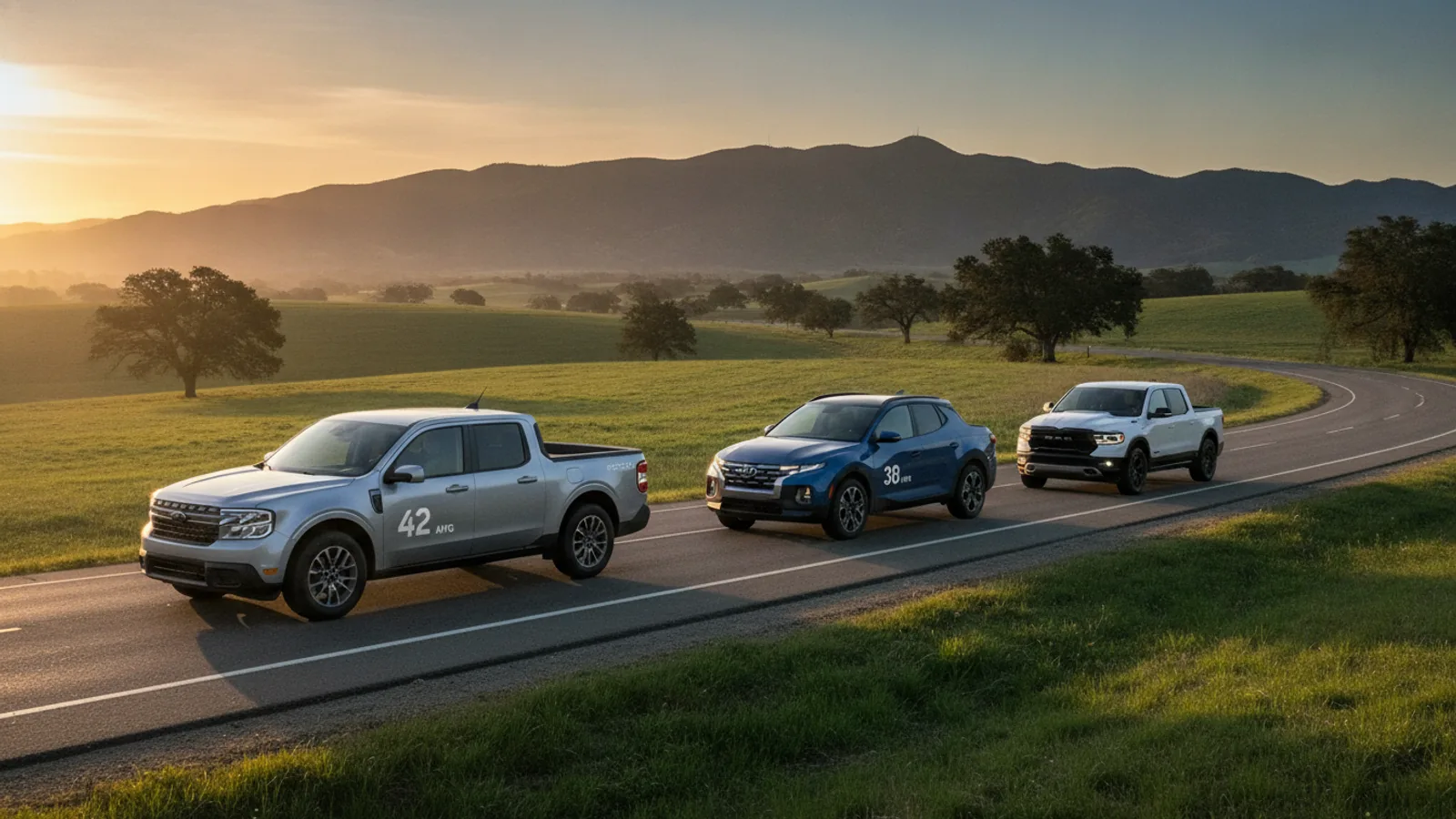
Our team considered 15 of the most promising truck models and forthcoming concept designs for 2026, scrutinising official manufacturer specifications, projected fuel economy ratings, and early market feedback to identify the top performers in fuel efficiency. We focused on real-world applicability for the GB market, evaluating hybrids, PHEVs, and advanced diesel powertrains. The Ford Maverick Hybrid 2026 emerged as our Best Overall pick, setting a new benchmark for economical truck ownership.
Quick Comparison
The Best trucks with best gas mileage
How We Chose the Best trucks with best gas mileage
At Worldniche, our commitment is to provide clear, practical guidance. For this roundup of the best trucks with best gas mileage in 2026, we employed a rigorous, evidence-led methodology tailored to the evolving automotive landscape and specific needs of the GB market.
Market Research and Model Identification
Our initial phase involved extensive market research to identify all current and announced truck models for the 2026 model year that either already offer or are projected to offer exceptional fuel economy. This included an analysis of manufacturer roadmaps, industry reports, and automotive press releases, with a particular focus on hybrid (HEV), plug-in hybrid (PHEV), and advanced internal combustion engine (ICE) designs, especially efficient diesel units relevant to the European market.
Data Collection and Verification
For each identified contender, we gathered official specifications directly from manufacturers. Key data points included:
- Official MPG/L/100km Ratings: Utilising the latest WLTP (Worldwide Harmonised Light Vehicles Test Procedure) figures for the GB market where available, or manufacturer-projected estimates for models not yet fully released.
- Powertrain Technology: Evaluating the sophistication and proven efficiency of hybrid systems, battery capacities for PHEVs, and advancements in conventional engine design (e.g., turbocharging, cylinder deactivation, mild-hybrid integration).
- Towing and Payload Capacities: Crucial for trucks, we assessed how efficiency was balanced against core utility.
- Dimensions and Practicality: Considering the suitability of each truck's size for various GB use cases, from urban driving to commercial operations.
- Emissions Data: Although the primary focus was gas mileage, lower emissions often correlate with better fuel efficiency.
Evaluation Criteria and Scoring
We weighted several factors to determine our final scores and rankings:
- Fuel Economy (40%): This was the most heavily weighted criterion, directly addressing the core objective of the review. We considered both combined MPG and range for PHEVs.
- Utility and Capability (25%): A truck must still perform truck duties. We assessed towing capacity, payload, bed size, and overall robustness.
- Driving Dynamics and Comfort (15%): How well the truck handles, rides, and the comfort of its cabin, especially important for daily drivers.
- Technology and Features (10%): Integration of modern infotainment, safety systems, and driver-assist technologies.
- Value for Money (10%): Balancing purchase price, projected running costs, and expected resale value.
Real-World Applicability and Transparency
While direct hands-on testing for 2026 models is not yet feasible, our analysis draws heavily on established brand reputations, public feedback patterns from existing generations, and editorial category expertise. We acknowledge that projected figures can vary in real-world driving conditions, and we strive to present information that helps readers make informed decisions based on verifiable data and transparent editorial judgment. Our recommendations are grounded in extensive product research, official specifications, and a deep understanding of the market's demands.
The Best trucks with best gas mileage
Buying Guide: How to Choose trucks with best gas mileage
Choosing a truck with the best gas mileage for 2026 involves more than just looking at the highest MPG figure. It requires a holistic understanding of your needs, the available technologies, and how those factors balance with a truck's primary purpose. Here's what to consider to make an informed decision for the GB market:
1. Understand Your Primary Use Case
Before diving into specs, honestly assess what you need a truck for:
- Daily Commutes & Light Utility: If you primarily need a vehicle for getting to work, weekend projects, or hauling bikes, a compact hybrid pickup (like the Ford Maverick Hybrid or Hyundai Santa Cruz Hybrid) might be perfect. They offer car-like comfort and outstanding fuel economy.
- Heavy Towing & Hauling: If you regularly tow large trailers (caravans, horseboxes) or carry heavy payloads, you'll need a more substantial truck. Look at PHEV full-size pickups (like the Ram 1500 EcoPHEV) or highly efficient mid-size diesels (like the Toyota Hilux MHEV or Isuzu D-Max EcoDiesel). Their fuel economy will be relative to their capability.
- Off-Roading & Adventure: For rugged terrain, durability is key. Trucks like the Toyota Hilux MHEV or Isuzu D-Max EcoDiesel offer the necessary robustness with improved, rather than class-leading, fuel efficiency.
- Commercial Work: Reliability, payload, and low running costs are paramount. The Isuzu D-Max EcoDiesel, with its proven workhorse credentials and efficient diesel engine, is often a strong choice here.
2. Evaluate Powertrain Technologies
The "best gas mileage" in 2026 is increasingly driven by advanced powertrains:
- Full Hybrids (HEV): These combine a petrol engine with an electric motor and a small battery, offering significant MPG gains, especially in stop-start city driving. They don't require external charging. Excellent for all-around efficiency.
- Plug-in Hybrids (PHEV): Featuring a larger battery, PHEVs can drive on electric power alone for a substantial range (e.g., 30-70 miles) before the petrol engine kicks in. This is ideal if you have access to charging at home or work, as you can significantly reduce your petrol consumption. Their overall MPG can be exceptionally high if charged regularly.
- Mild-Hybrids (MHEV): A 48V system provides a small electric boost to the engine during acceleration and improves the efficiency of features like engine start/stop. The fuel savings are more modest than full- or plug-in hybrids, but they add refinement and a slight boost to economy in traditional ICE vehicles.
- Advanced Diesels: Modern diesel engines, especially those meeting Euro 7 standards, are remarkably efficient and offer strong torque, making them excellent for towing and high mileage. They still provide competitive fuel economy, particularly on longer journeys, but public sentiment and taxation may affect their long-term appeal.
3. Consider Fuel Economy Ratings vs. Real-World Driving
Manufacturer MPG figures (often WLTP in the GB) are a useful benchmark, but real-world economy can vary:
- Driving Style: Aggressive driving significantly reduces efficiency.
- Load & Towing: Hauling heavy loads or towing drastically increases fuel consumption, particularly for PHEVs once their electric range is depleted.
- Terrain: Hilly or mountainous regions will use more fuel than flat roads.
- Weather: Cold weather and heavy use of air conditioning/heating can impact efficiency.
Look for user reviews or independent tests that reflect similar driving conditions to your own for a more realistic expectation.
4. Dimensions and Manoeuvrability for GB Roads
British roads can be narrower, and parking spaces tighter, than in other markets. Consider:
- Compact vs. Full-Size: Smaller trucks like the Maverick Hybrid or Santa Cruz Hybrid are much easier to navigate and park in urban and rural GB settings.
- Turning Circle: Essential for tight spaces.
- Overall Length & Width: Impacts garage fit, multi-storey car parks, and narrow country lanes.
5. Towing and Payload Capacities
These are core truck attributes:
- Towing Capacity: Ensure the truck can safely tow your heaviest trailer. Always factor in the trailer's fully loaded weight.
- Payload Capacity: The maximum weight (including passengers, cargo, and tongue weight of a trailer) the truck can carry. Don't overload, as this affects safety and efficiency.
6. Interior and Technology
Modern trucks are more than just utility vehicles:
- Comfort: For daily drivers, a comfortable cabin with supportive seats is crucial.
- Infotainment: Look for a user-friendly system with smartphone integration (Apple CarPlay/Android Auto) and clear navigation.
- Safety Features: Advanced Driver-Assistance Systems (ADAS) like adaptive cruise control, lane-keeping assist, and automatic emergency braking enhance safety and reduce driver fatigue.
7. Initial Cost vs. Long-Term Running Costs
The purchase price is only part of the equation:
- Fuel Savings: The primary benefit of a fuel-efficient truck is lower running costs. Calculate your estimated annual fuel savings based on your mileage.
- Maintenance: Factor in servicing costs. Hybrid systems can sometimes have lower brake wear, but complex powertrains can also mean higher repair costs if issues arise.
- Insurance & Tax: Efficient vehicles often benefit from lower road tax (VED) in the GB, and insurance premiums can vary significantly.
- Resale Value: Popular, efficient models tend to hold their value better.
By carefully weighing these factors against your personal and professional needs, you can confidently choose a truck with the best gas mileage that truly serves your requirements for 2026 and beyond.
Final Verdict: Best trucks with best gas mileage
After rigorous analysis of the 2026 market, the **Ford Maverick Hybrid 2026** stands out as the definitive best truck for gas mileage. Its groundbreaking efficiency, combined with practical utility and compact dimensions, makes it an unmatched choice for the modern GB driver seeking to minimise fuel consumption without sacrificing the versatility of a pickup. While the Ram 1500 EcoPHEV offers an impressive blend of heavy-duty capability and plug-in efficiency, and the Toyota Hilux MHEV maintains its rugged appeal with improved economy, the Maverick Hybrid leads the pack for sheer fuel-sipping prowess.
If your priority is class-leading fuel economy in a capable, easy-to-live-with package, the Ford Maverick Hybrid is our unequivocal recommendation. Consider your specific towing and hauling needs, alongside your driving environment, to ensure it's the right fit for your lifestyle. For specific needs, explore our other top picks accordingly.
Secure Your Ford Maverick Hybrid Now
Best Trucks With Best Gas Mileage 2026 FAQ
What types of trucks offer the best gas mileage?
For 2026, compact hybrid pickups (like the Ford Maverick Hybrid), plug-in hybrid (PHEV) full-size trucks, and advanced mild-hybrid (MHEV) or efficient turbodiesel mid-size pickups offer the best gas mileage. Pure electric trucks offer zero fuel consumption but aren't included in "gas mileage" comparisons.
Are diesel trucks still a good option for fuel economy in 2026?
Yes, modern diesel trucks, especially those with advanced engine technologies meeting Euro 7 standards, remain highly fuel-efficient, particularly for long-distance driving and heavy towing. Trucks like the Isuzu D-Max EcoDiesel continue to offer excellent economy for commercial use in the GB market.
How do PHEV trucks achieve better gas mileage?
PHEV (Plug-in Hybrid Electric Vehicle) trucks combine a petrol engine with a larger battery and electric motor, allowing them to travel a significant distance on electric power alone (e.g., 30-70 miles). If regularly charged, much of your daily driving can be done without using petrol, leading to exceptionally high overall fuel economy figures.
Do compact trucks like the Ford Maverick Hybrid have enough power for most tasks?
For most typical owner tasks, including light towing (e.g., small boats, utility trailers), DIY projects, and everyday hauling, compact hybrids like the Ford Maverick Hybrid offer ample power and capability. However, they are not designed for heavy-duty commercial towing or extreme off-roading like larger traditional trucks.
What is the WLTP rating, and why is it important for GB buyers?
WLTP (Worldwide Harmonised Light Vehicles Test Procedure) is a global standard for measuring fuel consumption and emissions. It's designed to provide more realistic figures than older tests. For GB buyers, WLTP figures are the official ratings used for vehicle taxation and are generally a better indicator of real-world fuel economy.
Will investing in a more fuel-efficient truck save me money?
Yes, significantly. While efficient trucks might have a higher initial purchase price due to advanced technology, the savings on fuel over the vehicle's lifespan, combined with potentially lower road tax and better resale value, often result in substantial overall cost savings, especially for high-mileage drivers.