How To Buy A Used Car
A practical step-by-step guide to how to buy a used car, including preparation, instructions, common issues, tips, and next steps.

How To Buy A Used Car
Buying a used car can seem tricky, but this guide breaks down the process into clear, manageable steps. We'll help you understand how to research, inspect, and buy a used car safely in the GB market, ensuring you get a fair price and avoid common problems. This guide is especially useful if you're a first-time buyer or want to refresh your knowledge on the best practices for a smooth purchase.
Fast Answer
- Key actions: Set budget, research models, check history, inspect in person, test drive, handle paperwork carefully.
Before You Start
- Driving licence: You'll need this for test drives.
- Budget plan: Know your maximum spend, including insurance and running costs.
- Internet access: For research, HPI checks, and finding cars.
- Trusted friend or mechanic: Someone to help you inspect the car (optional but recommended).
- Mobile phone: For photos, calls, and checking details on the spot.
- Pen and paper: To note down details and questions.
- Torch: Handy for looking into hard-to-see areas of the car.
- Folder or digital space: To keep all important documents organised.
What You Need
Before you even start looking at cars, gather what you'll need. This includes your valid driving licence, a clear idea of your budget, and a basic understanding of what kind of car you're looking for. Having a trusted friend or even a mechanic with you for inspections can be a huge advantage. They might spot things you miss.
Safety, Timing, or Context Checks
It's vital to do some checks before you get too involved. Make sure you understand how much you can truly afford, not just for the car itself, but also for insurance, road tax, fuel, and potential maintenance. Research common scams related to used car sales in the GB market, such as 'ringing' (changing a car's identity) or selling a car with outstanding finance. Knowing your rights as a buyer, especially when buying from a dealer, is also very important.
Step-by-Step Instructions
1. Set Your Budget and Define Your Needs
The very first step is to figure out how much you can realistically spend. This isn't just the price of the car. You also need to think about ongoing costs like insurance, road tax, fuel, and servicing. Get a few insurance quotes for different car models you're considering; these can vary hugely. Also, consider what you need from a car: do you need space for a family, good fuel economy for commuting, or something small for city driving? Thinking about these things upfront will narrow down your search.
2. Research Car Models and Average Prices
Once you know your budget and needs, start researching specific car models. Look for cars known for reliability in your price range. Websites like What Car?, Auto Express, and Honest John offer reviews and reliability surveys. Pay attention to common faults reported by owners. Check online marketplaces (like Auto Trader, Motors.co.uk, eBay Motors) to get an idea of average prices for models you like. This helps you recognise a good deal and avoid overpriced cars.
3. Find Potential Cars to View
Now that you know what you're looking for, it's time to find cars to view. You can look at:
- Online Marketplaces: These have the biggest selection. Filter your search by make, model, price, mileage, and location.
- Used Car Dealerships: They offer consumer rights protection and often provide warranties. Prices might be slightly higher.
- Private Sellers: Often cheaper, but you have fewer legal protections if something goes wrong. Be extra cautious.
- Local Ads: Check local newspapers or community boards.
Contact sellers to ask questions about the car's history, why they're selling it, and when you can view it. Don't be afraid to ask for more photos or videos if you're travelling a long distance.
4. Check the Car's History and Documentation
Before you even see the car, or certainly before you buy it, make sure to check its past. This is crucial for peace of mind.
- MOT History: Use the Gov.uk website (DVLA) to check the car's MOT history for free. This shows past advisories and failures, indicating potential issues.
- Service History: Ask the seller for the car's service book. A full service history suggests the car has been well-maintained.
- HPI Check: Pay for a comprehensive vehicle history check from a reputable company. This will tell you if the car has been stolen, written off, has outstanding finance, or has had its mileage tampered with ('clocked').
- V5C Logbook: Ensure the seller has the current V5C (logbook) in their name and at their address. The V5C proves ownership, but it's not proof of identity. Compare the VIN (Vehicle Identification Number) on the V5C with the one on the car itself (usually visible through the windscreen or on a door pillar).
If any of these checks raise concerns, or if the seller is hesitant to provide information, it's a major red flag.
5. Inspect the Car in Person
When you go to see the car, take your time and be thorough. Ideally, view the car in daylight and dry conditions so you can see any flaws clearly. Bring your checklist, a torch, and your trusted friend if possible.
- Exterior: Walk around the car. Look for dents, scratches, rust, and mismatched paintwork, which could indicate a repair after an accident. Check panel gaps – they should be even.
- Tyres: Check the tread depth (must be at least 1.6mm in the GB). Look for cracks, bulges, and uneven wear. Make sure all four tyres are the same brand and type, if possible, as this suggests better maintenance.
- Interior: Check for excessive wear on seats, steering wheel, and pedals. Test all electrics: windows, mirrors, radio, air conditioning, lights, and warning lights on the dashboard. Make sure the seatbelts work correctly.
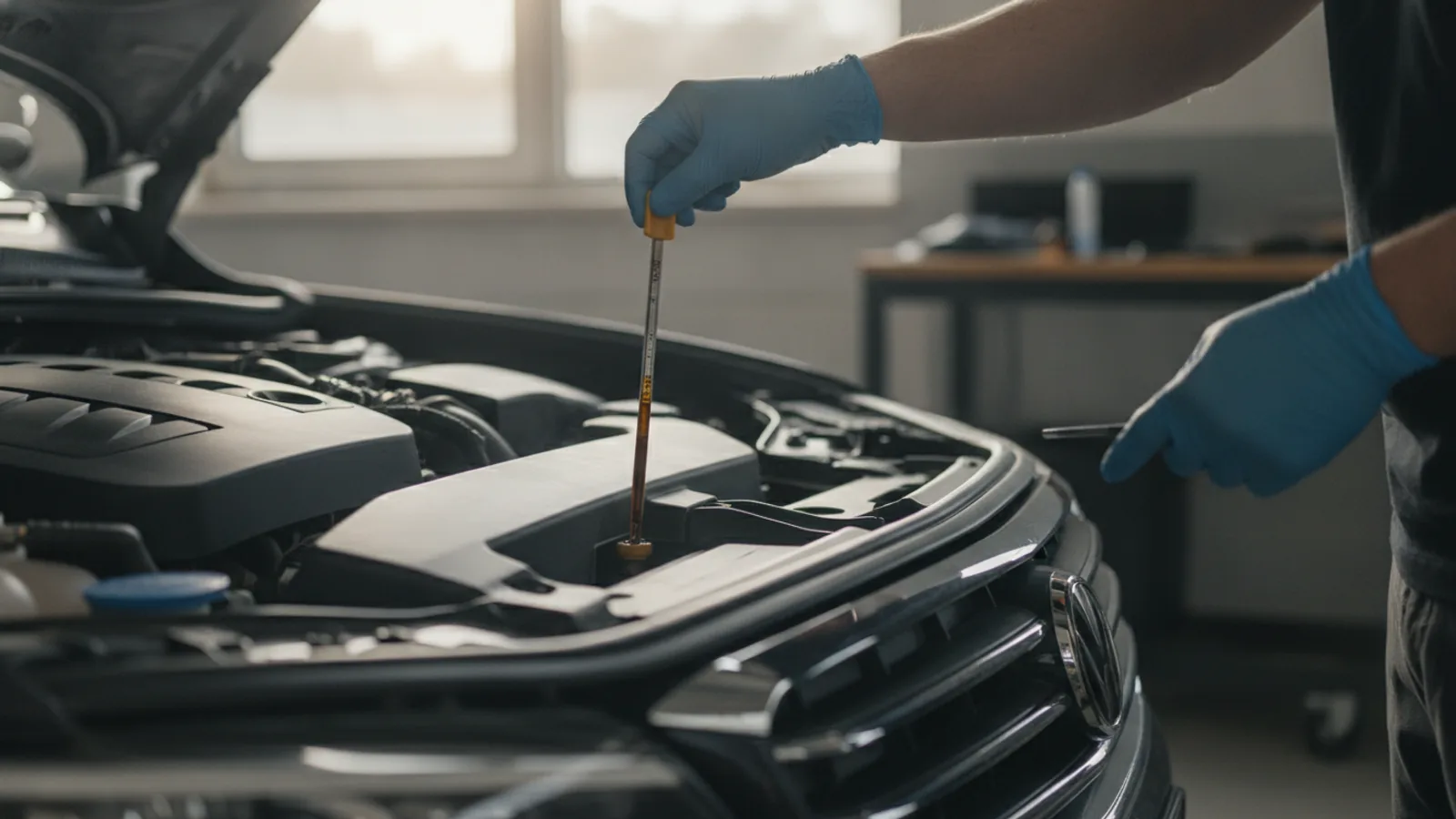
- Under the Bonnet: Look for fluid leaks (oil, coolant, brake fluid). Check fluid levels. Look at the battery condition and any loose wires. Check for signs of accident repair like bent chassis rails.
- Boot: Lift the carpet and check the spare wheel well for rust or water ingress. Ensure the spare wheel (or repair kit) and tools are present.
6. Take a Thorough Test Drive
This is your chance to see how the car performs on the road. Drive on different types of roads if possible: city streets, main roads, and maybe a faster road. Make sure you are insured to drive the car; usually, this means having 'driving other cars' cover on your own policy or arranging temporary cover. Ask the seller to come with you.
- Starting: Does the engine start easily? Listen for unusual noises.
- Brakes: Test the brakes gently first, then a bit harder. Do they feel spongy or pull to one side?
- Steering: Does the steering feel loose, or does the car pull to one side? Is there any vibration?
- Gears: If it's a manual, do the gears engage smoothly? For automatics, are changes smooth?
- Suspension: Drive over some bumps. Does the car feel stable, or do you hear knocking noises?
- Warning Lights: Watch the dashboard for any warning lights that stay on after starting or appear during the drive.
- Listen: Pay attention to any unusual rattles, squeaks, or hums from the engine, transmission, or wheels.
7. Negotiate the Price
Most used car prices are negotiable, especially with private sellers. Do your research on average prices (Step 2) and use any faults you found during inspection or test drive as points for negotiation. Be polite but firm. Don't be afraid to make a reasonable offer that is lower than the asking price. If you can't agree on a price, be prepared to walk away. There are always other cars.
8. Complete the Paperwork
Once you've agreed on a price, it's time for the legal bits. This step is critical for a smooth transfer of ownership.
- Sales Receipt: Get a detailed receipt signed by both you and the seller. It should include the car's make, model, registration number, mileage, VIN, sale price, and the date. Crucially, it should also state that the car is "sold as seen" (for private sales) or specify any warranty (from a dealer).
- V5C Logbook: The seller must fill out the V5C logbook. You, as the new owner, must sign section 2 for a private sale, or section 6 for a dealer. The seller then sends the V5C to the DVLA, and you receive the new V5C in your name within a few weeks. Make sure you get the green 'New Keeper Slip' (V5C/2) from the seller – this is your temporary proof of ownership.
- Service History and MOT Certificate: Collect all service stamps, receipts, and the current MOT certificate from the seller.
- Warranty (if applicable): If buying from a dealer, ensure you understand the terms of any warranty offered.
9. Arrange Payment and Collect the Car
The safest way to pay for a used car is usually by bank transfer (BACS or CHAPS) or a banker's draft. Avoid carrying large amounts of cash. Ensure the funds clear before you take possession of the car. Always meet in a public place, or at the seller's registered address (which should match the V5C). Once payment is confirmed and all paperwork is complete, you can drive your new used car away. Remember to arrange insurance coverage for the car to start from the moment you take ownership.
Quick Reference
| Situation | Use this | Why |
|---|---|---|
| Unsure about car history | Get an HPI check (e.g., from hpi.co.uk) | Reveals outstanding finance, write-off status, theft, mileage discrepancies. |
| Worried about mechanical issues | Arrange a pre-purchase inspection by a mechanic | A professional can spot hidden problems you might miss. |
| Seller has no V5C logbook | Walk away from the sale | No V5C means the seller isn't the legal owner, or the car has issues. |
| Car looks great, but price is low | Check average prices carefully & do all history checks | Too-good-to-be-true deals often hide major problems or scams. |
| Negotiating the price | Highlight any minor faults you found during inspection | Gives you leverage to ask for a lower price. |
| Paying for the car | Use a bank transfer or banker's draft | Safer than cash and provides a clear transaction record. |
Common Problems When You Buy a Used Car
Even with careful preparation, buying a used car can have its pitfalls. Knowing what these are and how to handle them can save you a lot of trouble and money.
Buying a "Lemon" (Car with Hidden Faults)
This is one of the biggest fears for used car buyers. A "lemon" is a car that looks good on the surface but has serious, often expensive, hidden mechanical or structural problems. You might not discover these until after you've bought it and driven it for a while.
- Fix: This is why thorough inspections, test drives, and especially a professional pre-purchase inspection are so important. An HPI check can reveal if a car has been a write-off, which often means structural damage. For private sales, 'sold as seen' usually means you have little comeback, so upfront checks are your main defence. For dealers, you have more consumer rights.
Paying Too Much for the Car
It's easy to get excited and overpay, especially if you fall in love with a specific car. Overpaying means you lose money straight away and might struggle to sell it for what you paid later.
- Fix: Do your research on average market prices for the specific make, model, year, and mileage (Step 2). Use online valuation tools to get an estimate of a fair price. Be prepared to negotiate and walk away if the seller won't budge on an unreasonable price.
Scams and Fraud
Unfortunately, there are people out there trying to trick buyers. Common scams include selling stolen cars, cars with outstanding finance, cars with fake service history, or 'ringing' (giving a stolen car the identity of a legitimate one).
- Fix: The HPI check (Step 4) is your best defence against stolen cars, outstanding finance, and write-offs. Always check the V5C logbook carefully against the car's VIN and the seller's details. If anything feels off, or the seller is pushing you to buy quickly, be very suspicious.
Paperwork Issues
Incorrectly completed paperwork can lead to major headaches, including you not being the registered keeper, difficulties with road tax, or issues if you want to sell the car later.
- Fix: Pay close attention during Step 8. Ensure the V5C is completed correctly, you receive the New Keeper Slip, and you get a proper sales receipt. Keep all documents safe. If buying from a private seller, verify their address matches the V5C.
Lack of After-Sales Support (Especially with Private Sales)
If you buy a car privately and a fault appears a week later, you have very few legal rights for a refund or repair. With a dealer, you have much stronger consumer rights under the Consumer Rights Act 2015, which states the car must be of satisfactory quality, fit for purpose, and as described.
- Fix: Understand the difference in your rights between private and dealer sales. If buying privately, your checks must be even more rigorous. If buying from a dealer, understand the warranty terms and keep records of all communications.
Advanced Tips for How to Buy a Used Car
Once you've mastered the basics, these tips can help you find an even better deal or make a smarter purchase.
Consider a Pre-Purchase Inspection (PPI) by a Mechanic
For more expensive cars or if you're not confident in your own inspection skills, consider paying an independent mechanic to carry out a pre-purchase inspection. Organisations like the AA or RAC offer this service. They will thoroughly check the car's mechanical condition and provide a detailed report, potentially saving you from a costly mistake.
Understand Different Types of Sellers
The type of seller affects your rights and the price. You have significantly more legal protection when buying from a dealer than from a private seller. Dealers are legally obliged to sell cars that are "of satisfactory quality, fit for purpose and as described". Private sellers only need to ensure the car is "as described". This difference means you should be extra cautious with private sales.
Read Model-Specific Owner Reviews
Beyond general car reviews, look for long-term owner reviews. These often highlight quirks, common issues that develop over time, and the true cost of ownership (e.g., specific parts that wear out quickly). Websites like Parkers and What Car? often feature owner reviews.
Factor in Future Running Costs
Beyond insurance and fuel, consider the cost of typical repairs and maintenance for your chosen model. Some brands or models have more expensive parts or require specialist labour. Check online forums for common repair costs. Also, consider the car's depreciation rate; some models hold their value better than others.
Use Online Valuation Tools for Negotiation
Tools like Glass's Guide, Parkers, or Auto Trader's valuation service can give you a very accurate estimate of a car's market value based on its age, mileage, and condition. Use this information to back up your negotiation points. If the car is priced much higher than its valuation, you have strong grounds to negotiate down.
Check for Recalls
Before buying, check if the specific make and model has had any outstanding safety recalls. You can usually do this on the manufacturer's website or the DVSA website in the GB. While recalls are typically fixed for free, an outstanding one might indicate neglect if the previous owner hasn't taken it in.
How To Buy A Used Car FAQ
What is an HPI check, and do I really need one?
An HPI check (Hire Purchase Inspection) is a detailed vehicle history check. It tells you if a car has been stolen, written off, has outstanding finance on it, or has had its mileage tampered with. Yes, you absolutely need one, especially for private sales. It's a small cost (£15-£25 typically) that can save you thousands of pounds and huge headaches.
What paperwork do I need to look for when buying a used car?
The essential documents are the V5C logbook (registration document), a complete service history (stamped service book or invoices), and the current MOT certificate. Also, ask for any receipts for recent work, warranty information (if from a dealer), and ensure you get a signed sales receipt.
How long should a test drive be?
Aim for a test drive of at least 20-30 minutes. This gives the engine a chance to warm up and allows you to experience the car on different types of roads (city, open road, bumps). Don't rush it; use the time to properly assess the car's performance and comfort.
Can I return a used car if I find problems later?
It depends on where you bought it. If you bought from a dealer, the Consumer Rights Act 2015 gives you strong protection. You have 30 days to reject a faulty car for a full refund if the fault was present at the time of purchase. After 30 days, the dealer gets one chance to repair or replace it. For private sales, your rights are much more limited. You can only return the car if it's "not as described" – for example, if the seller lied about the mileage.
What's the difference between buying from a private seller vs. a dealer?
Buying from a private seller often means lower prices but significantly fewer legal rights if something goes wrong. You buy the car "as seen," and your only recourse is if the seller lied about the car. Dealers, on the other hand, usually charge more but offer consumer protection under the Consumer Rights Act 2015, which means the car must be of satisfactory quality and fit for purpose. Dealers also often provide warranties.
Final Checklist for How to Buy A Used Car
Before you shake hands and part with your money, run through this final checklist to ensure you haven't missed anything important.
- Budget confirmed: Have you accounted for the car's price, insurance, road tax, and initial running costs?
- Car needs defined: Does this specific car meet your essential requirements for size, fuel type, and features?
- Research completed: Have you checked model reliability and average market prices?
- HPI check cleared: Is the car free from finance, not stolen, and not a write-off?
- MOT history checked: Are there any major past advisories or failures?
- Service history confirmed: Does the car have a comprehensive record of maintenance?
- V5C logbook verified: Does the seller's name and address match the V5C, and is the VIN correct?
- Physical inspection thorough: Have you checked the exterior, interior, tyres, and engine bay for any issues?
- Test drive satisfactory: Did the car perform well on the road, and were there any warning lights?
- Price negotiated: Have you agreed on a fair price, potentially using any discovered faults as leverage?
- Sales receipt signed: Do you have a detailed receipt with all car and sale information?
- V5C New Keeper Slip obtained: Have you received your temporary proof of ownership?
- Insurance arranged: Is your insurance policy active from the moment you take the car?
- Payment secure: Are you using a safe, traceable method of payment like a bank transfer?
- Trusted opinion sought: Did you get a second opinion from a friend or mechanic if possible?