How To Read Tire Size
A practical step-by-step guide to how to read tire size, including preparation, instructions, common issues, tips, and next steps.
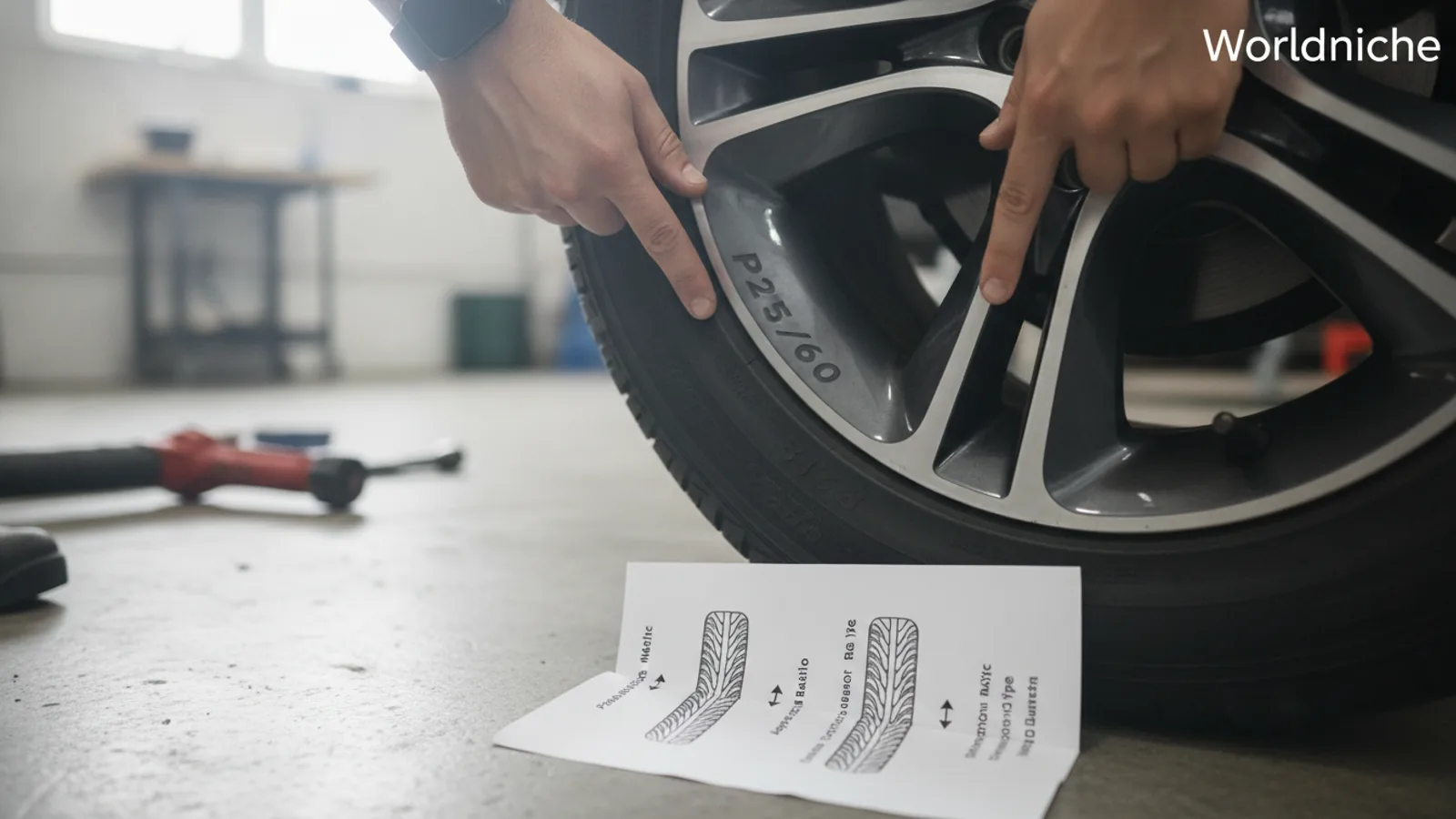
How To Read Tire Size
Understanding the sequence of numbers and letters on your tire's sidewall is essential for safe driving and proper vehicle maintenance. This code tells you everything from the tire's dimensions to its load capacity and maximum speed. This guide will walk you through, step-by-step, how to find and decipher your tire size, ensuring you can choose the correct replacement tires for your car, van, or lorry with confidence. Knowing how to read tire size is crucial when you're shopping for new tires or simply want to verify that your vehicle is fitted with the correct equipment.
Fast Answer
- Tire Width: The first 3-digit number (e.g., 225) is the width in millimetres.
- Aspect Ratio: The 2-digit number after the slash (e.g., 45) is the sidewall height as a percentage of the width.
- Construction: The letter 'R' stands for Radial, the standard for modern cars.
- Wheel Diameter: The number after 'R' (e.g., 17) is the wheel rim diameter in inches.
- Load & Speed: The final number and letter (e.g., 91W) are codes for the maximum load and speed.
Before You Start
Before you begin, it’s helpful to know where to find the correct information and what you'll need. The goal is to find the tire size recommended by your vehicle's manufacturer, as this is the safest and most reliable specification to use.
- Access to your vehicle's tires: You will need to be able to clearly see the sidewall of at least one tire.
- Vehicle owner's manual: This is a reliable source for the original equipment manufacturer (OEM) tire specifications.
- A torch (optional): The lettering on a dirty or worn tire can be hard to read, and a torch can make it much clearer.
Step-by-Step Instructions
Step 1: Locate the Tire Size Code
The first task is to find the string of numbers and letters that represents the tire size. You have three primary places to look. The most visible location is the sidewall of your tire. Look for a series of characters that looks something like 205/55R16 91V. It is usually the most prominent text on the tire.
If the tire is dirty or worn, you may have trouble reading it. The second and most reliable place to look is the tire information placard. This is a sticker typically located on the inside of the driver's side door frame. Open the door and look along the frame where the door latches. This placard lists the original tire sizes recommended by the manufacturer, as well as the correct inflation pressures.
Finally, you can find the recommended tire size in your vehicle's owner's manual, usually in the section covering wheels and tires or general specifications.
Step 2: Understand the First Number (Tire Width)
Let's use the common tire size 205/55R16 91V as our example. The first number in this sequence is 205. This number represents the nominal width of the tire from one sidewall to the other, measured in millimetres.
So, in our example, the tire is 205 millimetres wide. A larger number indicates a wider tire, while a smaller number indicates a narrower tire. Tire width affects handling and contact with the road. Wider tires generally provide more grip, but can sometimes be less effective in snow and may increase fuel consumption.
Step 3: Decode the Second Number (Aspect Ratio)
The second number, found after the slash, is the aspect ratio. In our example, 205/55R16, the aspect ratio is 55. This number is not a direct measurement in millimetres. Instead, it represents the height of the tire's sidewall as a percentage of its width.
To calculate the sidewall height for our example, you would take 55% of the 205mm width. This gives you a sidewall height of 112.75mm. A lower aspect ratio number (e.g., 40 or 45) means a shorter sidewall, which is common on performance cars for sharper handling. A higher number (e.g., 65 or 70) means a taller sidewall, often found on SUVs and family cars for a more comfortable ride.
Step 4: Identify the Letter (Tire Construction)
The letter that follows the aspect ratio indicates the internal construction of the tire. In our example, 205/55R16, the letter is R. This stands for Radial construction.
Radial tires have been the industry standard for passenger cars for decades. Their internal ply cords run radially (at a 90-degree angle to the direction of travel), which provides a smoother ride, better steering control, and lower fuel consumption compared to older designs. You might occasionally see a 'D' for Diagonal (or bias-ply) construction or a 'B' for Belted, but these are very rare for modern cars and are typically found on classic vehicles or specific off-road applications.
Step 5: Read the Third Number (Wheel Diameter)
The next number indicates the diameter of the wheel (or rim) that the tire is designed to fit. In our example, 205/55R16, the number is 16. Unlike the tire width, this measurement is in inches.
This means the tire is designed to be mounted on a 16-inch diameter wheel. This number is critical. You cannot fit a 16-inch tire onto a 17-inch wheel, or vice versa. When buying new tires, you must ensure this number matches the size of your existing wheels.
Step 6: Interpret the Load Index
Following the wheel diameter is a two or three-digit number known as the load index. In our example, 205/55R16 91V, the load index is 91. This number is a code that corresponds to the maximum weight, in kilograms, that a single tire can safely support when fully inflated.
It's important to understand this is a code, not the actual weight. You need to refer to a load index chart to find the corresponding capacity. For example, a load index of 91 means the tire can support up to 615 kg. The load index of your replacement tires must be equal to or greater than the index specified by your vehicle's manufacturer. Using a tire with a lower load index is extremely dangerous and can lead to tire failure.
Common Load Index Values
| Load Index | Max Load per Tire |
|---|---|
| 88 | 560 kg |
| 91 | 615 kg |
| 94 | 670 kg |
| 97 | 730 kg |
| 100 | 800 kg |
Step 7: Check the Speed Rating
The very last character in the sequence is a letter, and it represents the speed rating. In our example, 205/55R16 91V, the speed rating is V. This letter indicates the maximum speed the tire can safely sustain over a prolonged period.
Like the load index, this is a code that corresponds to a specific speed. A 'V' rated tire, for instance, is certified for speeds up to 149 mph (240 km/h). When choosing new tires, you should select a speed rating that is equal to or higher than the one specified for your vehicle. Fitting tires with a lower speed rating than recommended can compromise safety and handling, especially at motorway speeds, and may invalidate your insurance.
Common Speed Ratings
| Rating | Max Speed |
|---|---|
| S | 112 mph (180 km/h) |
| T | 118 mph (190 km/h) |
| H | 130 mph (210 km/h) |
| V | 149 mph (240 km/h) |
| W | 168 mph (270 km/h) |
| Y | 186 mph (300 km/h) |
Common Problems When You Read Tire Size
Even with the information above, you might run into a few confusing situations. Here are some common problems and how to solve them.
The tire size starts with a 'P' or 'LT'. What does that mean?
Sometimes you'll see a letter before the main size code. A 'P' stands for P-Metric, which is a designation for passenger car tires in North America. An 'LT' stands for Light Truck. If there is no letter, it is likely a Euro-Metric tire, which is the standard in the UK and Europe. P-Metric and Euro-Metric tires of the same size have slightly different load specifications, but are often interchangeable. LT tires are built more robustly for lorries and vans and should not be replaced with passenger car tires.
I can't find the tire size on the sidewall.
If the markings are difficult to read, first try cleaning the tire sidewall with a cloth. If it's still unreadable, use a torch held at an angle to make the raised lettering cast a shadow. Remember to also check the inner sidewall, as sometimes markings are only on one side. If all else fails, rely on the information placard on the driver's door jamb or in your owner's manual. This is the most reliable source anyway.
What do all the other numbers on the tire mean?
You'll see many other codes on a tire sidewall. The most important one to be aware of is the DOT code, which is a long string of characters ending in four digits. These last four digits tell you the week and year the tire was manufactured. For example, '3523' means the tire was made in the 35th week of 2023. You may also see UTQG ratings for treadwear, traction (AA, A, B, C), and temperature (A, B, C), which are quality grades.
Advanced Tips for Reading Tire Size
Once you've mastered the basics, here are a few advanced concepts that can help you make more informed decisions.
- Understanding Tire Age: As mentioned above, the DOT code tells you when a tire was made. Tires degrade over time, even when not in use. It's generally recommended to avoid buying tires that are more than five years old, and to replace any tire that is over ten years old, regardless of tread depth. The rubber can become brittle and unsafe.
- Plus-Sizing and Minus-Sizing: This is the practice of changing your wheel size. For example, moving from a 16-inch wheel to a 17-inch wheel is called "plus-one" sizing. To do this correctly, you must choose a new tire with a lower aspect ratio to keep the overall diameter of the wheel and tire combination the same. This is crucial for maintaining speedometer accuracy and ensuring the tire doesn't rub against the car's body. This should always be done with the guidance of a professional tire fitter.
- Winter and All-Season Markings: When buying new tires, look for specific symbols that indicate their suitability for different weather. The 'M+S' or 'M&S' marking stands for Mud and Snow. For superior winter performance, look for the Three-Peak Mountain Snowflake (3PMSF) symbol, which indicates the tire has met a specific standard for performance in severe snow conditions.
Quick Reference
| Code Section | What It Means | Example: 205/55R16 91V |
|---|---|---|
| 205 | Tire Width | The tire is 205 millimetres wide. |
| 55 | Aspect Ratio | The sidewall height is 55% of the tire's width. |
| R | Construction Type | It is a Radial tire. |
| 16 | Wheel Diameter | It fits a 16-inch diameter wheel. |
| 91 | Load Index | Maximum load capacity of 615 kg per tire. |
| V | Speed Rating | Maximum safe speed of 149 mph. |
How To Read Tire Size FAQ
Can I use a different tire size on my car?
Do all four tires have to be the exact same?
What happens if I use a tire with the wrong load index or speed rating?
Is the tire size for a spare tire the same?
Final Checklist for Reading Tire Size
- Check the Door Jamb: Start by finding the manufacturer's recommended tire size on the sticker inside the driver's side door frame.
- Match the Core Numbers: Verify that the width, aspect ratio, construction type, and wheel diameter (e.g., 205/55R16) match the recommendation.
- Confirm Load and Speed Ratings: Ensure any new tire has a load index and speed rating that are equal to or higher than the original specification (e.g., 91V).
- Inspect the DOT Code: When buying tires, check the last four digits of the DOT code to confirm they were manufactured recently (ideally within the last couple of years).
- Consult a Professional: If you are unsure about any aspect of your tire size or are considering changing sizes, always seek advice from a qualified tire fitter.