How Long Do Car Batteries Last
A practical step-by-step guide to how long do car batteries last, including preparation, instructions, common issues, tips, and next steps.
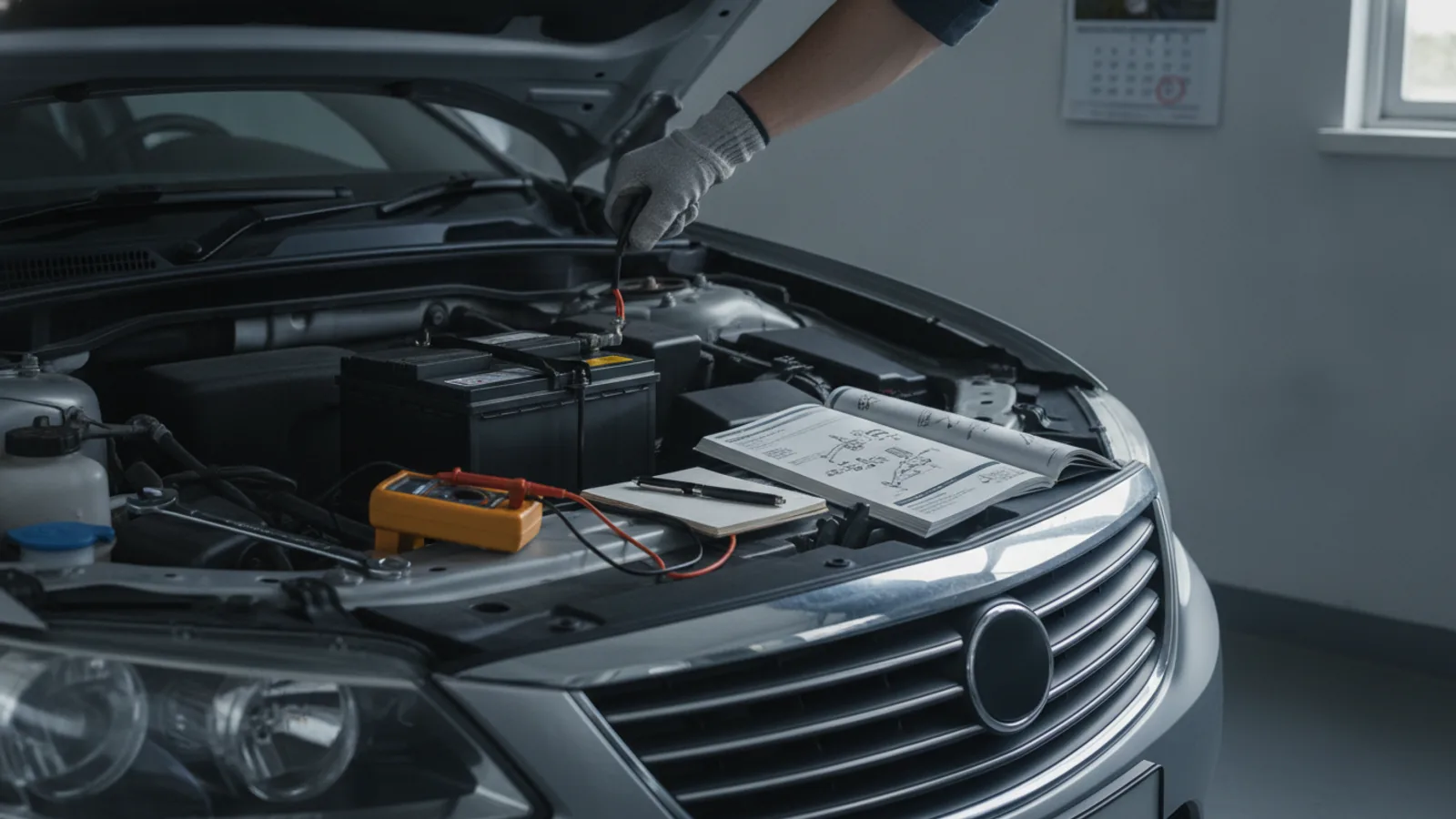
How Long Do Car Batteries Last
A typical car battery lasts between 3 to 5 years, but this can vary widely depending on your climate, driving habits, and the type of battery in your vehicle. Understanding these factors is key to avoiding the inconvenience of a flat battery. This guide provides clear, practical steps to help you check your battery's health, understand the warning signs of failure, and maximise its lifespan through simple maintenance you can do yourself.
Fast Answer
- Average Lifespan: 3 to 5 years
- Key Factors: Climate (especially heat), driving habits, and vehicle electronics
- Warning Signs: Slow engine crank, dim lights, battery warning light on the dash
- Main Cause of Failure: Heat degradation and sulphation from undercharging
Before You Start
Gathering a few basic tools and understanding the safety precautions are essential before you inspect or work on your car's battery. This will ensure you can perform checks accurately and without risk.
- Safety Goggles and Gloves: To protect your eyes and skin from corrosive battery acid.
- Car Owner's Manual: To find battery specifications and any vehicle-specific procedures.
- Digital Multimeter: An inexpensive tool for accurately testing your battery's voltage.
- Battery Terminal Cleaner or Wire Brush: For removing any corrosion from the posts and clamps.
- Baking Soda and Water: A simple, effective solution for neutralising acid and cleaning corrosion.
- Adjustable Wrench or Spanner Set: For loosening and tightening terminal clamps.
How to Check and Extend Your Car Battery's Life
By following a few regular maintenance steps, you can significantly extend the life of your car battery and prevent unexpected breakdowns. This process involves identifying your battery type, performing regular checks, and understanding how your usage affects its health.
Identify Your Car Battery Type
Not all car batteries are the same. The first step is to know what you're working with, as this affects maintenance. Look at the label on top of your battery. You will likely find one of three common types:
- Flooded Lead-Acid: The traditional, most common type. Some have removable caps on top, allowing you to top up the electrolyte level with distilled water. Many modern versions are "maintenance-free" and sealed.
- Absorbent Glass Mat (AGM): These are completely sealed and spill-proof. They are more resistant to vibration and handle deep discharges better than flooded batteries. They are standard in vehicles with start-stop technology and those with high power demands.
- Enhanced Flooded Battery (EFB): A more robust version of a standard flooded battery, also designed for cars with start-stop systems, though AGM is generally considered superior.
Your owner's manual will also specify the correct type for your vehicle. Using the wrong type can lead to poor performance and premature failure.
Perform a Regular Visual Inspection
Once a month, open the bonnet and take a close look at your battery. You don't need any tools for this quick check. Look for tell-tale signs of trouble:
- Corrosion: A white, blue, or greenish powdery substance around the battery terminals (posts). This build-up can interfere with the electrical connection.
- Cracked or Bulging Case: If the battery's plastic case looks swollen or has any cracks, it could have been damaged by freezing or overheating. It should be replaced immediately and handled with extreme care.
- Frayed or Loose Cables: Check that the cables leading to the terminals are in good condition and that the clamps are snug.
- Leaking Fluid: Any sign of moisture on or around the battery indicates a leak, which is a serious safety hazard.
Catching these issues early can prevent you from being stranded.
Test the Voltage with a Multimeter
A multimeter gives you a precise reading of your battery's health. For an accurate resting voltage test, ensure the car has been switched off for at least four hours, or preferably overnight. This allows any surface charge from driving to dissipate.
- Set your digital multimeter to the 20V DC setting (indicated by V with a straight line and dots).
- Touch the red probe to the positive (+) terminal of the battery.
- Touch the black probe to the negative (-) terminal.
- Read the voltage displayed on the screen.
A healthy, fully charged battery should read around 12.6 to 12.8 volts. A reading of 12.2 volts means it's only at about 50% charge, and a reading below 12.0 volts indicates it's significantly discharged and may be unable to start the car. A consistently low resting voltage suggests the battery is failing or there's a problem with the vehicle's charging system.
Assess Your Driving Habits
How you use your car has a huge impact on battery life. The alternator needs time to recharge the battery after the large power draw of starting the engine.
- Short Trips: Consistently driving for less than 20 minutes is a major battery killer. The alternator doesn't have enough time to replace the charge used to start the car, causing the battery to be in a perpetually undercharged state.
- Infrequent Use: Leaving a car to sit for weeks allows the battery to slowly self-discharge. If it drains too low, permanent damage can occur.
- Heavy Accessory Use: Using the radio, lights, or air conditioning for long periods with the engine off will quickly drain the battery.
To counteract this, try to take a longer drive of at least 30 minutes at a steady speed at least once a week. If you store your car for long periods, consider using a smart battery maintainer or trickle charger.
Factor in Your Local Climate
Temperature is one of the most significant factors in battery longevity. Both extreme heat and cold affect performance and lifespan, but in different ways.
Hot weather is the battery's worst enemy. High temperatures accelerate the rate of chemical degradation inside the battery, causing internal components to wear out much faster. A battery in Scotland might last five years, while the same battery in a hot southern European climate might only last three.
Cold weather doesn't damage the battery in the same way, but it reduces its available power. At 0°C, a battery has about 35% less cranking power than it does at 20°C. At the same time, cold engine oil becomes thicker, requiring more power to start. This combination is why battery failures are so common on the first frosty morning of the year.
Keep the Battery Terminals Clean and Tight
The corrosion you spotted during your visual inspection needs to be removed. A clean, tight connection is vital for proper starting and charging. To clean the terminals safely:
- Disconnect the cables from the battery. Always disconnect the negative (-) terminal first, then the positive (+). This prevents accidental short-circuiting.
- Create a paste using a tablespoon of baking soda and a small amount of water.
- Apply the paste to the terminals and cable clamps and scrub away the corrosion with a wire brush or a dedicated terminal cleaning tool. You'll see it fizz as it neutralises the acid.
- Rinse the terminals and clamps with a small amount of clean water and dry them thoroughly with a clean cloth.
- Reconnect the cables. Always connect the positive (+) terminal first, then the negative (-).
- Ensure the clamps are securely tightened with a wrench so they can't be twisted by hand.
Applying a thin layer of dielectric grease or a specific terminal protector spray can help inhibit future corrosion.
Ensure the Battery is Securely Fastened
Your car's battery is held in place by a hold-down clamp or bracket for a reason. Engine and road vibrations can be surprisingly violent and can cause physical damage to the battery's internal lead plates, leading to short circuits and premature failure.
During your inspection, grab the battery and try to move it. It should be completely firm and not wiggle at all. If it moves, locate the hold-down clamp (usually a small bracket at the base or a bar across the top) and tighten the nuts or bolts until the battery is secure. This simple check takes only a minute and can save you from a costly replacement.
Quick Reference
| Situation | Check or Action | Why |
|---|---|---|
| Car won't start, just clicks | Test battery voltage / Get a jump start | The battery likely lacks the power to turn the engine over. |
| White powder on terminals | Clean with baking soda & water solution | Corrosion prevents good electrical contact and can drain power. |
| Car sits unused for weeks | Use a trickle charger or battery maintainer | Prevents the battery from self-discharging to a damagingly low level. |
| Lots of short, city trips | Take a longer, 30+ minute drive weekly | Allows the alternator enough time to fully recharge the battery. |
| Battery is over 4 years old | Get it professionally load tested | A load test is the best way to determine its true health before it fails. |
Common Problems That Shorten Battery Life
Beyond normal wear and tear, several common issues can cause a battery to fail prematurely. Being aware of them can help you diagnose a problem before it leaves you stranded.
Parasitic Drain
A parasitic drain is an electrical component that continues to draw power from the battery after the ignition is turned off. Common culprits include a faulty alarm system, a glove box or boot light that stays on, or a poorly installed aftermarket stereo. If your battery is consistently flat after being parked overnight, a parasitic drain is a likely cause. A mechanic can perform a specific test to isolate the faulty circuit.
Sulphation
When a lead-acid battery is left in a discharged state for too long, hard crystals of lead sulphate form on its internal plates. This process, called sulphation, reduces the battery's ability to accept and hold a charge. The primary cause is chronic undercharging from too many short trips. While some advanced multi-stage battery chargers have a "reconditioning" mode that can help break down minor sulphation, heavy sulphation is irreversible.
Faulty Alternator
The alternator is responsible for recharging your battery and powering the car's electronics while the engine is running. If the alternator is failing, it can't supply enough current to keep the battery charged. The battery will try to make up the difference, but it will quickly drain and fail. Warning signs of a bad alternator include a battery warning light on the dashboard, headlights that dim at idle, or a whining noise from the engine.
Advanced Tips for Maximising Battery Lifespan
For those looking to get the absolute most out of their battery, a few extra steps can make a difference.
Use a Smart Battery Charger
A modern smart charger (or battery maintainer) is a worthwhile investment, especially if you don't drive your car daily. Unlike a simple trickle charger, a smart charger analyses the battery's condition and uses a multi-stage charging process. This optimises the charge, prevents overcharging, and some models include a reconditioning mode that can help reverse the early stages of sulphation, extending the battery's overall service life.
Consider an AGM Upgrade
If your car originally came with a standard flooded battery and you consistently make short trips or have added power-hungry accessories (like a large sound system), upgrading to an AGM battery could be a smart move. AGM batteries are better at handling frequent deep discharges and recharge more quickly than their flooded counterparts. Always ensure the AGM battery you choose is compatible with your vehicle's size, terminal configuration, and charging system.
Install a Battery Insulator
In climates with extreme heat or cold, a battery insulator can help. This is essentially a thermal blanket or box that fits around the battery. It helps shield the battery from high under-bonnet temperatures in the summer and retains some of its own heat in the winter, moderating its temperature and reducing the stress caused by extremes.
How Long Do Car Batteries Last FAQ
Here are answers to some of the most common questions about car battery longevity.
How can I tell how old my car battery is?
Most batteries have a sticker on the case with a date code. This is often a simple month and year format (e.g., 11/23 for November 2023). Some brands use a code where a letter corresponds to the month (A for January, B for February, etc.) and a number for the year (e.g., K4 for November 2024). If you can't find a sticker, the date may be stamped into the plastic case itself.
Do I need a special battery for a car with start-stop technology?
Yes, absolutely. These vehicles place enormous demands on the battery, and they must be fitted with either an AGM or an EFB battery. These are specifically designed to handle the hundreds of extra engine starts and deeper discharge cycles. Installing a conventional battery in a start-stop vehicle will result in it failing very quickly, often within a few months.
Can a car battery die suddenly without warning?
Yes. While there are usually warning signs like slow cranking, a sudden internal failure can occur. A common cause is a short circuit between the lead plates inside one of the battery's cells. This can happen due to vibration or simple degradation over time, causing the battery to lose its charge almost instantly.
Does jumping a car damage the battery?
If performed correctly according to the instructions in your owner's manual, jump-starting is generally safe. However, connecting the cables incorrectly can cause a voltage spike that damages the sensitive electronics in both vehicles. Furthermore, if a battery is repeatedly needing a jump start, it's a clear signal that the battery itself is failing or there is a problem with the car's charging system that needs to be addressed immediately.
Final Checklist for Battery Maintenance
Use this checklist to stay on top of your battery's health and catch problems before they start.
- Check Monthly: Perform a quick visual inspection for any signs of corrosion, leaks, or a bulging case.
- Check Every 6 Months: Test the resting voltage with a multimeter. A reading of 12.6V or higher is ideal.
- Clean as Needed: If you see any corrosion, clean the terminals and clamps thoroughly.
- Verify Secure Mounting: Ensure the battery hold-down bracket is tight and the battery cannot move.
- Mind Your Driving: Make a point to take a longer drive weekly if you typically only do short trips.
- Plan for Replacement: Once your battery is over three years old, have it professionally load tested during your annual service, especially before winter arrives. This gives you a true indication of its remaining life.